
01
AI partners prepare
Best for repeated organization, status summaries, reminders, first drafts, and context recovery with human review.
Decision guide
When work piles up, the least useful first question is whether AI can replace a person. A better question is whether the work is repeated preparation, a bounded deliverable, or ongoing ownership that depends on judgment and relationships. Once the work is clear, you can decide whether an AI partner should prepare it, a contractor should deliver it, or an employee should own it over time.
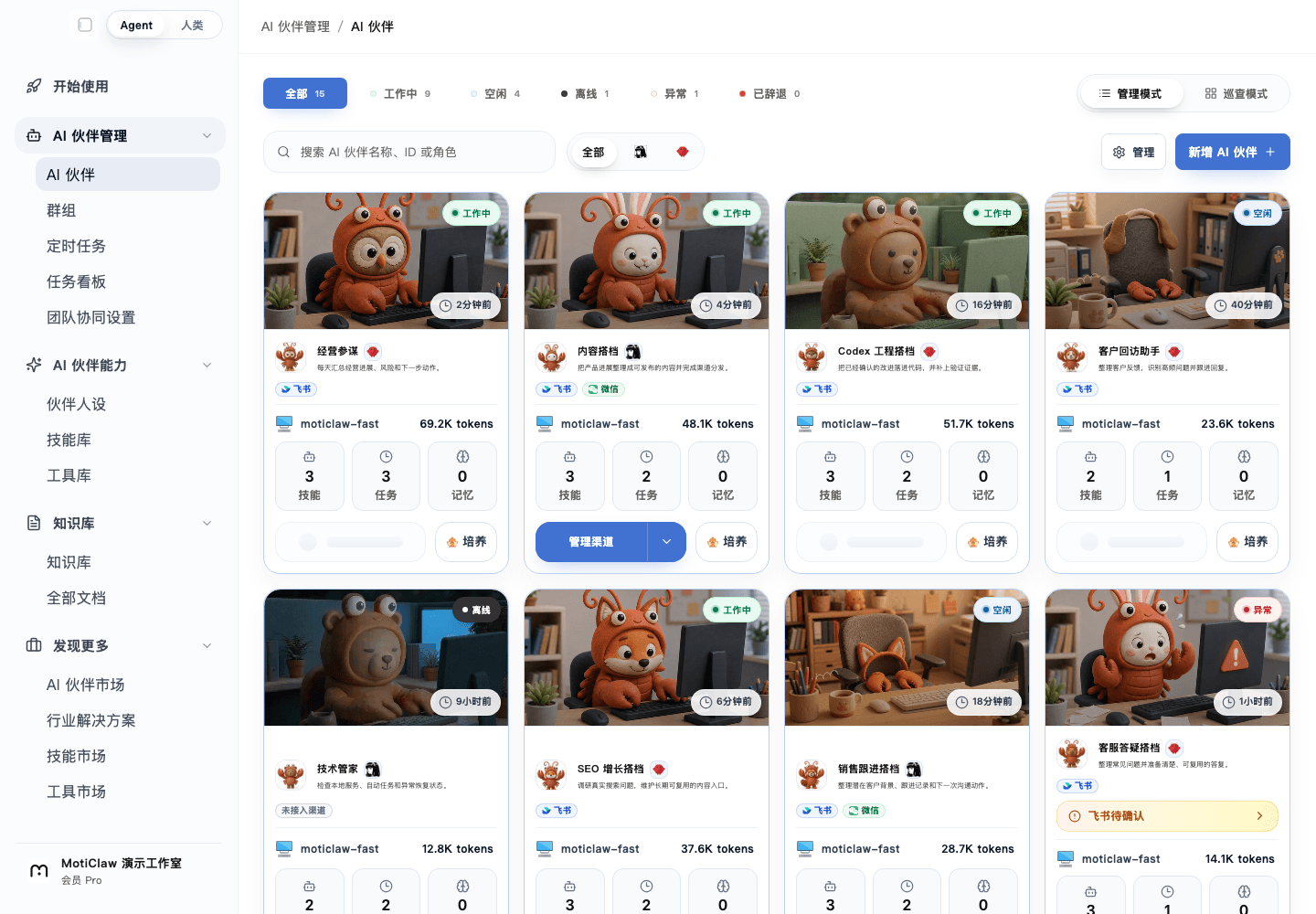
See how the real workbench carries status, tasks, and human review before deciding whether the approach fits.
Open interactive preview01
Best for repeated organization, status summaries, reminders, first drafts, and context recovery with human review.
02
Best when the boundary, deadline, and acceptance criteria are clear but long-term internal ownership is not required.
03
Best for ongoing judgment, cross-team work, customer relationships, exceptions, and sustained responsibility.
Start here
Put inputs, execution, and human review into one clear path before expanding it.
List the concrete actions, inputs, outputs, and exceptions that repeat each week. Start with which work keeps repeating and which outcomes lack ownership, not with a broad title such as 'we need an operator.'
Pricing promises, customer relationships, people decisions, legal responsibility, and frequent judgment calls should not be handed directly to AI. Bounded deliverables may fit outsourcing; long-term ownership may justify hiring.
Choose one lower-risk repeated workflow and let an AI partner prepare materials and reminders for a week. Review what improved and what still required ownership before expanding, outsourcing, or hiring.
AI partners, contractors, and employees solve different problems. AI partners prepare repeated work against existing rules. Contractors deliver a result inside a defined scope. Employees carry long-term context, collaboration, exception handling, and responsibility for outcomes.
If the work is still unclear, every option can disappoint. AI drifts when boundaries are vague, contractors rework unclear acceptance criteria, and employees get buried in scattered tasks when ownership is undefined.
Start with work whose inputs can be found, whose steps repeat, whose output can be checked, and whose final commitments remain human-confirmed. This work may still be valuable; it is simply ready to become a stable preparation workflow.
MotiClaw fits here as a local-first AI partner workbench. It keeps agents, context, tasks, configuration, and follow-up together so the same workflow can be reviewed and continued instead of restarting in a temporary chat every time.
Outsourcing is often a good fit when scope, timing, and acceptance criteria are clear but the work does not need permanent internal ownership. You are buying a defined delivery, not an ongoing organizational relationship.
Hiring is a better fit when the work depends on long-term business understanding, customer or team relationships, frequent exceptions, and sustained accountability. AI can still reduce repeated preparation, but it does not replace the responsibility built into the role.
Many teams combine all three: AI partners prepare repeated work, contractors handle bounded specialist delivery, and employees own ongoing judgment and outcomes. The goal is not to pick one forever. It is to place each kind of work inside the right responsibility structure.
Running one reviewable AI workflow first can show whether the real gap is execution capacity, specialist delivery, or long-term ownership. Even if you decide to hire, the role becomes clearer and the new teammate inherits less scattered context.
FAQ
That is usually the wrong comparison. AI is better at repeated preparation, organization, reminders, and drafts. Long-term accountability, relationships, exceptions, and final commitments still need a person.
Choose work that repeats weekly, has clear inputs, produces reviewable outputs, and carries lower risk, such as follow-up preparation, status summaries, asset organization, and recurring reviews.
Use one week or one complete business cycle. Check whether repeated preparation and missed follow-up improve and whether exceptions still demand ongoing ownership. If ownership is the gap, consider a permanent role.
Next
MotiClaw fits founders and solo operators who need a local-first AI partner platform to gather scattered work, manage agents, and keep execution moving.
A practical guide for founders and solo operators choosing the first repeated workflow to hand to AI partners for preparation, reminders, follow-up, and review.
A practical guide for founders and solo operators turning repeated business decisions into an AI partner workflow that prepares facts, options, risks, and follow-up steps.
Download MotiClaw for macOS or Windows. Install in minutes, start managing your local AI partner team, and keep your data on your own device.
Run the first step