
01
The demo is not the finish line
Keep examples, runtime state, critical settings, and customer questions as delivery assets.
Playbook
A working agent demo is only the first step. The real pressure starts afterward: who changes configuration, where runtime status is checked, how user feedback returns to the next version, and whether delivery material can be reused. MotiClaw helps indie developers turn that post-demo work into a local-first workbench instead of another pile of temporary notes.
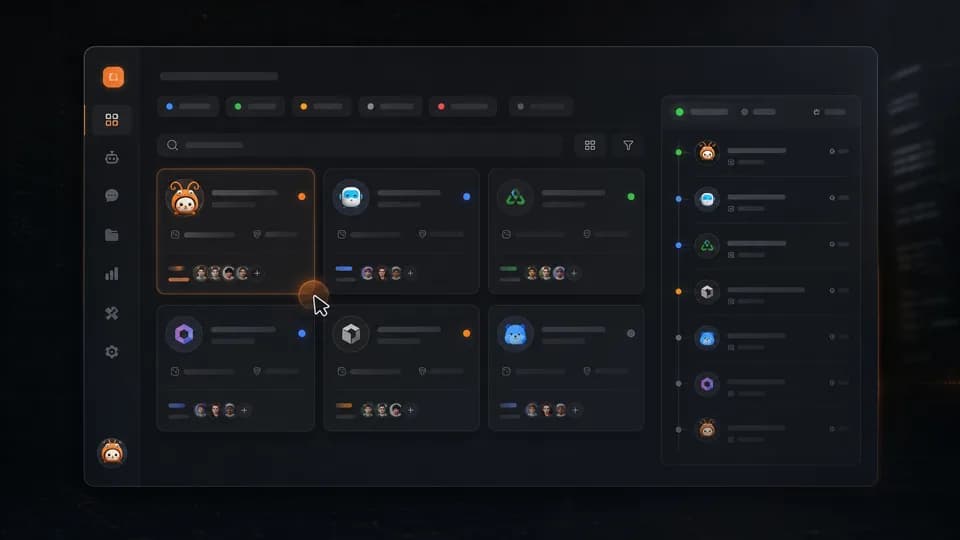
Use this capability view to understand how the product enters the work; the interactive preview and verified screenshots remain the product truth.
Open interactive preview01
Keep examples, runtime state, critical settings, and customer questions as delivery assets.
02
Clarify what data enters the workbench, what still needs human judgment, and which settings should not be changed casually.
03
Turn updates, fixes, checks, and feedback into a checklist the next client can benefit from.
Start here
Put inputs, execution, and human review into one clear path before expanding it.
Keep launch status, sample data, critical settings, download paths, and common questions in a checklist you can review before each demo.
Bring issues, screenshots, logs, configuration changes, and customer wording into one path instead of spreading them across chats and temporary docs.
Clarify who handles regular checks, configuration adjustments, version updates, and what evidence is needed before the next expansion.
Indie developers often carry product, pre-sales, delivery, support, and maintenance alone. Once the demo works, customers ask more concrete questions: can data be changed, can another service be connected, where should issues be checked, and when will the next version improve?
If that context only lives in chats, temporary scripts, and personal memory, each additional trial customer multiplies the maintenance burden. The gap between demo and maintenance needs a reusable path.
For an AI indie developer, a workbench should not be judged only by whether it can start a conversation. It should support the real work that begins after the demo.
Compare whether agent state, service configuration, runtime boundaries, customer feedback, delivery notes, and maintenance records can stay on one path instead of scattering across tools.
When a demo first moves into a trial, do not promise that every feedback loop will be handled automatically. First make inputs, status, confirmation points, and ownership clear.
Once the maintenance path is stable, it becomes much easier to decide which repeated issues an AI partner can keep organizing and which decisions should remain human-led.
People searching for AI agent demos, AI agent maintenance, or AI indie developer platforms are usually looking for a stable method between prototype and service, not just inspiration.
This page connects demos, trials, configuration, feedback, and long-term maintenance so it can support self-review, customer communication, and community tutorials.
FAQ
Start with the demo checklist, critical configuration, feedback entry point, and maintenance ownership. A working demo link is not enough.
Screenshots, reproduction steps, configuration changes, data boundaries, incident handling, and customer confirmation points should all be traceable.
Once feedback patterns, checklists, and ownership boundaries are stable, an AI partner can help organize repeated issues, prepare checklists, and draft next-change material.
Next
For AI indie developers, MotiClaw helps turn agent management, service configuration, client demos, and delivery maintenance into a sustainable local-first workflow.
Compare local-first AI agent platforms and cloud SaaS across data boundaries, maintenance, continuity, collaboration, cost, and exit paths before moving a real workflow.
MotiClaw fits AI indie developers who want one local-first workbench for agent management, service configuration, local deployment, and client delivery.
For FDEs and AI delivery builders, this guide turns post-delivery configuration notes, health checks, maintenance ownership, data boundaries, and expansion planning into a clear client handoff.
See how MotiClaw brings agent onboarding, status, daily operations, configuration, and delivery into one local-first workbench for FDEs, AI indie developers, and founders.
Run the first step